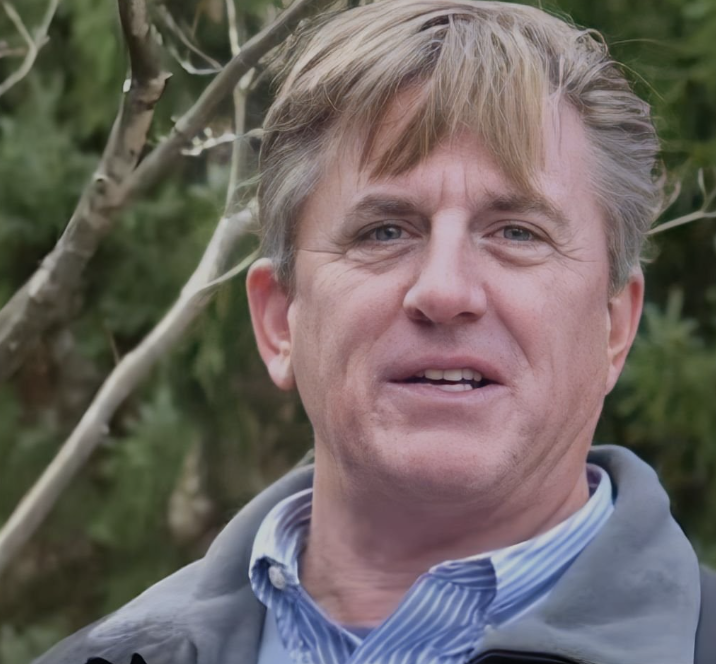
About this time last year, the Birmingham Business Journal published an article titled “Frugal by Design.” They talked with local architects about something that I truly think is national in interest: the changing landscape of the building business.

Three trends were identified that I’ve seen do nothing but grow over the last year. In fact, we’ve been involved in each:

1. Sustainable buildings. How can we build with the least environmental impact, now and down the road?

(Image: Ruffner Mountain nature center, which we built to LEED specifications)


2. Durable building materials. What is the upfront cost vs the cost over a building’s lifecycle?

(Image: LED Light poles we installed at a Florence, Alabama shopping center currently under construction)

 
3. Transforming existing structures. How can we breath new life into existing buildings?

(Image: The Waters Building, a circa 1880s structure we reworked in downtown Birmingham)


We have constructed multiple LEED projects over the last few years, for the right reason: sustainability. We have taken the time to evaluate new material types and equipment, including high-efficiency mechanical systems. We have re-purposed old buildings and in the process given them new lives.

These trends seem to be interlocking. 

Recently, we were awarded a project for an environmental learning Center in the Southwest. In the process, we will transform a previous ice skating rink which is no longer in demand into an educational facility. This might be a double leverage. We will update an existing building and in turn help educate students in environmental fields.

To me, we need to start thinking long(er) term, not necessarily the way we have always done things over the past few decades. We hope to truly take advantage of what we have faced the last few years with the intent of benefiting future generations.

Did your business see a rise in the three “frugal by design” principles? What do you see ahead for 2012?

Share

Merrill Stewart is Founder and President of the Stewart Perry Company, a commercial building contractor based in Birmingham, Ala. Contact him via email


Tags: , , , , ,

Birmingham Mayor William Bell assists with ground breaking at ILR

There is something special about every project we build. Some bring vitality to communities. Adaptive reuse breaths new life into existing–often historical–buildings. LEED projects promote sustainability.

Last fall, we broke ground on a project that was more than special. It’s an honor.

Independent Living Resources provides community-based, non-residential services and advocacy for those living with disabilities. The new location we are building in Birmingham’s Civil Rights District seems more than fitting. As IRL Executive Director Dan Kessler, told The Birmingham News, “Human rights is a part of (the Civil Rights) mission, and disability rights is big part of that movement.”

Beyond all ILR gives the community, what most impressed us about their folks was the focus on something called Universal Design.

Universal Design centers on accessibility for as many people as possible. This can be in the form of environments, objects and systems. For followers of the concept, buildings should to be usable to the greatest extent possible by everyone, regardless of their age, ability or status in life.

Independent Living Resources is able to take universal design to a new level, because the majority of people on staff have disabilities. Involving them in the design process has been particularly enlightening.

Here are a few ways Universal Design is being used at ILR:

Door Openers. Standard accessible entrances include a push button for access, which excludes those who lack upper body mobility. ILR will be installing a version that can be activated using a wheelchair footrest. These will be placed inside and outside at the front and back doors.

Quiet Room. Individuals with stress disabilities or those prone to migraines can use this space to relax. It will be equipped with a daybed, and no cell phones or work materials are allowed inside.

Parking spaces. The 14 spaces closest to the building are divided by bollards and feature a detectable paver system for the vision-impaired. This also provides good visual separation for all drivers.

HVAC. The building has been divided into smaller HVAC zones, giving more control of the temperature in personal workspace and increasing the comfort of those people who work and visit.

Workstations. Areas such as the reception desk will have low and high transaction counters for better access for those who are doing business from a wheelchair.

Light. The lighting has been designed to minimize triggers for people who suffer seizures and other similar conditions. The open workspace features lots of windows, and glass partitions let the light flow throughout the office.

Site Selection. The building is located with convenient access to public transportation and sidewalks have been modified with ramps down to the street for access by people with disabilities.

Community Connectivity. The site is within walking distance of the power and gas utility companies, the Social Security office, and several other public buildings and community service organizations.

What we’re learning is that the principles of Universal Design make sense. Open spaces, wider halls, additional light and facilities that can be modified don’t just benefit people with disabilities. They make buildings better for us all.

What accessibility changes have you made to make your facilities better for everyone?

Share

Merrill Stewart is Founder and President of the Stewart Perry Company, a commercial building contractor based in Birmingham, Ala. Contact him via email


Tags: , , , , , , , , ,

Might be over-exposed.

That’s what the Wall Street Journal, “Indecent Exposure: The Downsides of Working in a Glass Office” says, anyway. With all the talk about the benefits of open design, no one seemed to consider the pitfalls. Here are a few the WSJ identified:

  • Privacy on personal matters, where human resources or other private meetings are made public, just because they can be seen.
  • The “fish bowl”effect, where coworkers find themselves exposed or distracted by their ability to see others.
  • The “Bird”effect, where people don’t see glass and walk right into it.
  • The noise factor, because glass walls allow 50-100% more noise to pass through.

As I’ve mentioned, when it was time for us to build our own campus, we worked hard to create the perfect workspace. After consulting with a few members of our team, my original thoughts for an entirely open workspace were overruled.

We ended up with what I believe is the perfect mix of openness and privacy. Each office has two glass walls–one to the outside and one facing inside. The interior walls have solid doors that shut, although we leave them open most of the time. We’ve dedicated lots of space to common areas. For us, it works.

Obviously, people need to work on their own many times, but a little bit of help never hurts. The mostly-open environment has been a real plus. If I had it to do all over again I would build office exactly the same way.

Here are a few images of our place under construction:

Our conference room, a mix of glass and solid walls, under construction.

Solid doors are flanked by glass.

Offices--light and bright--on either side of the hall.

Decals on our windows deflect birds...and people.

All outside walls are lined in windows.


Share

Merrill Stewart is Founder and President of the Stewart Perry Company, a commercial building contractor based in Birmingham, Ala. Contact him via email


Tags: , , , , , ,

Recently, we completed two projects using LED lighting for the parking fields. I thought it would be helpful to share a few basic observations and thoughts:


PROS:

Energy Efficiency. Conventional lighting wastes a high percentage of energy through heat, while LEDs remain cool. This makes these bulbs much more energy efficient. In total, LEDs consume about 50 to 60% less energy for similar lighting levels.

ROI. Since LED energy savings are significant, this should offset higher upfront capital cost for materials. In most cases (if the CAM component recapture can be determined) a payback will be seen within the 4 to 6 year range.

Lower CAM. Common area maintenance costs are lowered by the greater efficiency of LED.

Longevity. LED bulbs will last about 15 years, compared to the standards of parking area lighting today (3-4 years). LED bulbs also contain no glass components, so they are not vulnerable to vibration or breakage like conventional bulbs.

CONS:

Cost. Even though the price of LEDs has halved in the past three years, it’s still twice as expensive as more traditional high pressure sodium lights. Meanwhile, if the parking field lighting does not work for your project, we have also found LEDs in their present cost structure are excellent for canopies, parking decks, wall-mounted fixtures and common areas in malls.

Fixturing. For existing properties, installation will mean mounting more LED fixtures on an existing pole. LED traditionally has required lower mounting heights creating a need to add additional poles to existing projects. I believe this is changing, as there are new types of LED fixtures designed for mounting heights in the 35′ tall range.

Light levels. More LED bulbs are needed to provide similar light levels, compared to metal halide fixtures, which are less expensive initially. LED Light levels are not as bright when measured by traditional photopic light meter. If light readings are taken scotopically, which is how the eye actually sees light, the whiter light of LED appears brighter.

ALTERNATIVES:

For existing properties, one may wish to consider the use of Natural White, a hybrid metal halide product which burns for 26,000+ hours and hardly depreciates in quality of light during this period. Add a sophisticated control product like netLiNK, and properties should be able to get 8+ years out of this system for less money than LED at its current capital cost.

This is certainly an education period for all of us. While LEDs are a little more work on the front end, to us, using less energy is better for our communities and for the future generations. 

What have you experience have you had with LEDs?

Share

Merrill Stewart is Founder and President of the Stewart Perry Company, a commercial building contractor based in Birmingham, Ala. Contact him via email


Tags: , , , , , , , ,

We like to consider the folks we work with an extended family. And, like most families, Stewart Perry has a few holiday traditions.

Every year, we pick a weekend in December for all the team members who work on job sites come to our home office. We get a few meetings out of the way Friday afternoon, then dedicate the weekend to bringing our work family together with our spouses and kids. We have a brunch on campus Saturday morning and top the weekend off with a celebration at my house that evening.

This year, we added a new tradition.

Friday night, we invited a few of our long-term vendors and subcontractor relationships to our place. We started with beverages in the office, then moved outside. The Spoonfed Grill food truck was parked out front to provide some wonderful fish and chicken tacos, along with other delights that we enjoyed by the campfire.

The result was a chance for our team to shake hands with folks who help make us successful every week of the year.

A couple of our guys approached me afterwards, telling me they liked giving this kind of simple thank you to valued partners. They were also glad to further their relationships on a more personal level by talking about something other than work. The simple, face-to-face connect makes our ties run even deeper.

Have you thanked your partners this holiday season?

Share

Merrill Stewart is Founder and President of the Stewart Perry Company, a commercial building contractor based in Birmingham, Ala. Contact him via email

Tags: , , , , ,

Negotiation is a part of our business, and for that matter, most things in life.

CBS MoneyWatch recently posted 12 Negotiation Tips for People Who Hate Negotiating, and I was inclined to listen. Here they are:

  1. Go first.
  2. Be quiet.
  3. Know what you want.
  4. Assume the best case.
  5. Avoid setting ranges.
  6. Have a reason for concessions.
  7. Never be Harry Truman.
  8. Make time your friend.
  9. Ignore face value.
  10. Give the other person room.
  11. Forget about winning and losing.
  12. Create a lasting relationship.

While I find all these tips helpful, numbers 7 and 12 seemed particularly important to me.

Never be Harry Truman. He had a sign on his desk that said, “the buck stops here,” as a reminder that final decisions rested with him. It seems to me, if one adopts this attitude at the negotiating table, he will miss out on a lot of good opportunities.

I can think of one particular project that we negotiated for the better part of a decade (yes, 10 years). To date, it has been one of our most rewarding builds from several different perspectives, but fortunately we maintained multiple options throughout these years. When a roadblock was encountered by one set of parties, others in the company led off another trail to help move things along.

This is similar to what we’ve tried to do with all our customer relationships. We maintain multiple connects between our company to the partner so that if one should falter, there are others to pick up the relationship. To me, this is vital, especially in dealing with larger companies. It is not always a matter of price or performance.

Create a relationship. As I’ve mentioned before, you don’t get to make “second first impressions.” The way you negotiate today will certainly affect your business in the future. If I make concessions now, I always try to consider impact down the road. A long-term customer relationship is, in most cases, far more valuable than whatever details you might quibble about today.

Do you have additional tips for successful negotiating? 

Share

Merrill Stewart is Founder and President of the Stewart Perry Company, a commercial building contractor based in Birmingham, Ala. Contact him via email


Tags: , , , ,

In the U.S. today, right now, we have more of everything than we need. More housing, more GLA of every type of space, more service providers, more developers and more building contractors.

In order to survive this cycle, we’ve remained nimble, watched expenses and never forgotten what brought us to the party. Our goal is to not lose sight of the future. As Wayne Gretzky said, “I skate where the puck is gonna be, not where it has been.”

To me, being successful long-term will come from helping others achieve success. This means practicing what you do best and at the same time thinking ahead.

These are the best of times and the worst times for all of us. The best of us will be able to look over the horizon. I’ve been trying to anticipate what we will need more of in the next 5 or 10 years. Here are a few things we’re thinking about:

  • Housing for senior living. This is for the 60 and 70-year-old age group, which is the new 40. What will it take to be cool and reach folks who haven’t retired yet?
  • Urban Infill. Is the trend toward repurposing land within a built-up area a fad or a permanent path?
  • Medical sector. Can we put medical where the people are–in neighborhoods–taking advantage of existing GLA?
  • Office Buildings. How can we use the square footage of a space more efficiently?
  • Product distribution. How can we do this more efficiently? We’re looking for lower cost, less carbon and more seamless delivery.

Of course, these are some tricky challenges. But think about the folks who developed the coffee chain with the hard-to-pronounce drink names. Or the person and company who developed that device for us to listen to music downloaded from the Internet. As Steve Jobs once told BusinessWeek, “A lot of times, people don’t know what they want until you show it to them.”

To me, it is important not to forget what brought you to the party, and at the same time not miss the opportunity for what’s on the horizon.

Better yet, what’s over the horizon?…


Share


Merrill Stewart is Founder and President of the Stewart Perry Company, a commercial building contractor based in Birmingham, Ala. Contact him via email


Tags: , , , , , , ,

As an industry, the recent years have taken us  through some lows. As we continue to look ahead and heal, it’s important to consider and overcome what could hold us back.

At a recent breakfast, Brian Moore of FMI presented three challenges ahead of us, and some thoughts on how to keep them at bay.

1. Availability of entry-level employees.

The population of 15 to 24-year-olds is up by a million. This means we have an abundance of college graduates and not enough positions to offer them. In fact, we are having a hard time finding people to mentor them. That’s because our leaders are getting older.

2. Aging U.S. population

As Baby Boomers age and begin to retire, a generation of experienced workers is leaving the field. Project superintendents are particularly endangered. There are not people in the lower level management positions–folks in their 30s and 40s, traditionally thought to be in their working prime–to step up and fill vacancies.

3. Impact of immigration practices on the labor pools.

Hispanics make up 11% of the U.S. workforce and represent 30% of construction’s work pool. This population sector is growing rapidly. We have yet to see what this will mean for the growth and increased impact of Hispanic-owned contracting businesses, but we’d be wise to embrace their expertise.

Solutions to all three of these issues might lie in our industry’s reputation. When jobsrated.com ranked 200 job titles in terms of desirability, not a single construction title placed in the top 100. In fact, 10 industry job ranked lower than “maid” and 5 lower than “nuclear demolition technician.” Wow!

So how do we address these problems? Here is our take:

In the last 12 months, we have hired two new building science graduates. These positions were offered before college graduation. We have assigned sponsors within our company for each to ensure they are integrated into company policies, are well-treated and welcomed. To us, the key is to mentor and acclimate, once you have the good talent.

We are not finding difficulty locating good project superintendents in their 30s. Maybe it’s because we’re hiring younger folks and then making efforts to retain them?

As for immigration, that is a tough one. While we have not seen the impact of the recent state immigration laws, I do believe it will impact us, raising cost. Hopefully, if we can ever get a Congress with any sort of consensus, national policy and laws will come into play. Until then, we are seeking out workers who are in the U.S. legally. Labor cost will rise and fall depending upon the law of supply and demand, but we intend stay aboveboard.

What’s your take? Are there other ideas are out there that might be helpful?

Share

Merrill Stewart is Founder and President of the Stewart Perry Company, a commercial building contractor based in Birmingham, Ala. Contact him via email

Tags: , , , , ,

Earlier this week, I met with a national architectural firm with whom we are partnering on a 2012 mixed-use project. I asked the principals what they thought of BIM and their response was, “it will become the norm for architectural and engineering work sooner than later–in less than five years.”

We also believe BIM will become the standard, but not without growing pains and good effort to learn.

We know firsthand. On our first BIM project, our building superintendent was excited about getting into they system. He liked having the flat screen in the trailer and the ability to manipulate the plans. Cool. I recently spoke with him and he hasn’t done a whole lot more with it since then. The hype took over, but substance has not.

I also recently visited a site where everybody was carrying around iPads loaded with BIM software and the talk was about it being the greatest thing since sliced bread. As I read the tea leaves, I fear there is a bit of hype here as well.

So, how do you get past the hype?

For us, it all lies in educating our team.

Realize the initial benefits.

  • Using BIM in presentations can help you win jobs. This works as a commercial developer, a building contractor or as someone trying to sell the construction of a new project within your company.
  • Using BIM is helpful for non-construction types. Most have difficulty visualizing two-dimensional flat plans, but BIM helps them understand what they are seeing.
  • Putting BIM into practice will reduce change orders. The “tool” reduces clashes and delivers the images of the product with more clarity.
  • BIM will eliminate collisions and overlap between trades, saving time and money.

Realized future benefits.

  • BIM will be a great tool for operations and facilities management after construction is complete.
  • BIM will probably lead to better customer long term relationships. Models will help us “own” the project or development.

Realize the obstacles.

  • Right now there are only a small group of BIM-capable personnel in the workforce. With the hype, one would think everyone is using is using BIM, but that’s far from the truth.
  • The software is at times difficult to navigate, even after training. We’re hoping for more use-friendly programs that can be easily used in the field.
  • There are folks in the field who have been reading 2D drawings their entire lives. Widespread acceptance of  the technology will require it to be as easily accessed as a set of paper plans.

Even with these obstacles, to me, BIM is worth the time and cost on the front end. The gains in efficiency and understanding of the project will be of great value to our customer relationships.

Have you been successful putting BIM into practice? What challenges have you overcome?

Share

Merrill Stewart is Founder and President of the Stewart Perry Company, a commercial building contractor based in Birmingham, Ala. Contact him via email

Tags: , , , , , , , ,

Our CFO Del Allen recently attended the Birmingham Aon/Smith Currie breakfast, where they presented a “state of the union” type look at the construction industry.

Later this week, I will share 3 key issues effecting talent in the construction industry, but first I thought you might like to take a look at the stats. Many thanks to Brian Moore of FMI for allowing us to share.

Highest volume segments in 2011:

  • Power–Driven by environmental regulations and transmission/distribution projects.
  • Educational–Due to rapidly increasing student populations, widespread overcrowding and antiquated facilities.
  • Highway and street–Tough climate because state revenues are declining and residential construction is slow.

Strongest gainers in 2011:

  • Power (7%)
  • Commercial (7%)

Weakest segments in 2011

  • Religious (-18%)
  • Lodging (-16%)
  • Manufacturing (-6%)
  • Office (-5%)

Before you start thinking these numbers look dismal, consider the losses in 2010. Lodging and office construction were down 53% and 32%, respectively.

Total “put in place” (construction that has finished and is now being used) lost 10% in 2010, but is expected to grow 2% in 2011. Forecasters say we’ll be up 6% in 2012. From what I can see, we are healing.

Share

Merrill Stewart is Founder and President of the Stewart Perry Company, a commercial building contractor based in Birmingham, Ala. Contact him via email

Tags: , , , , ,

« Older entries